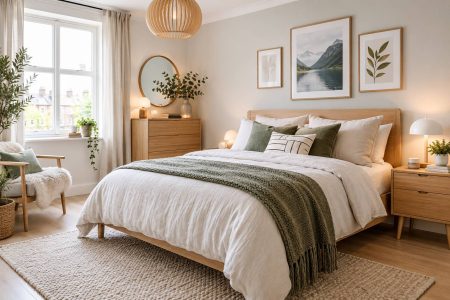


Small windows are a common feature of British homes, from Victorian terraces with narrow sash windows to modern new-builds with compact double-glazed units. While a small window can feel like a design limitation, the right curtains can transform it into a striking feature, make a room feel larger and brighter, and improve insulation against the UK’s notoriously changeable weather. This guide walks through everything you need to know to choose curtains that suit a small window, room by room, style by style, and budget by budget.
Why Small Windows Need Special Consideration
Curtains for a small window aren’t simply a scaled-down version of curtains for a large window. Get the proportions, fabric weight, or hanging method wrong, and you risk making the window look even smaller, blocking valuable natural light, or creating a cramped, heavy feel in the room. On the other hand, thoughtful choices can visually “trick” the eye into perceiving a bigger window and a brighter, airier space.
In the UK specifically, there are extra factors to weigh up:
- Limited natural light, especially in autumn and winter, means you don’t want to lose what little daylight a small window lets in.
- Older housing stock (Victorian, Edwardian, and Georgian properties) often has narrow, tall windows with deep reveals, which need a different approach to a modern, squat window in a new-build flat.
- Damp and condensation are more common in the UK climate, so fabric choice and ventilation around the curtain matter more than they might elsewhere.
- Energy efficiency is a growing priority given UK energy costs, so thermal properties are worth considering even for a small window.
With all that in mind, here’s a step-by-step approach.
Step 1: Measure Accurately
Before you even think about fabric or colour, get your measurements right. A common mistake with small windows is measuring only the window frame itself and buying curtains that fit it exactly, which tends to shrink the room’s visual proportions further.
What you’ll need: a steel tape measure (not fabric, which can stretch), a notepad, and ideally someone to help hold the other end for taller windows.
Measure the width of the window recess or frame, then decide on your pole or track width. For small windows, it’s usually best to extend the pole 15–20cm beyond each side of the frame. This allows the curtains to be pulled fully clear of the glass during the day, letting in maximum light, and visually widens the window.
Measure the drop (height) from where the pole or track will sit down to your chosen finishing point: sill length, below-sill, or floor length. Measure at both the left and right sides, as older properties in particular often have slightly uneven floors or ceilings.
Measure the depth of the recess if you’re considering an inside-the-recess fitting, as recess-mounted curtains work differently to wall-mounted ones and can make a small window feel more boxed in if not planned well.
Step 2: Decide Where to Hang the Pole or Track
This is one of the most impactful decisions for a small window, arguably more important than fabric choice.
Mount high and wide. Fitting the curtain pole close to the ceiling (rather than directly above the window frame) and extending it beyond the window’s edges is the single most effective trick for making a small window look larger. It draws the eye upward and outward, giving the impression of a taller, wider window than actually exists.
Avoid recess fitting for very small windows. While recess-fitted curtains or blinds look neat, they emphasise the window’s actual small size because the fabric can’t extend beyond the frame. Wall-mounted (also called “face-fixed” or “outside recess”) fittings are usually more flattering.
Consider a track over a pole for very tight spaces. Tracks can be bent around bay windows or awkward corners and often have a slimmer profile than a pole, which helps in a compact room.
Step 3: Choose the Right Curtain Length
Length has a big effect on how a small window is perceived.
- Floor-length curtains (or even a puddle of 2–3cm on the floor) elongate the wall and window, making the whole window wall feel taller. This is generally the most flattering option for small windows, especially in living rooms and bedrooms.
- Sill-length curtains can work well in kitchens or bathrooms where practicality matters more (avoiding contact with radiators, worktops, or damp sills), but they can make a small window look stumpier if the drop is very short.
- Below-sill length (10–15cm past the sill) is a good compromise where floor-length isn’t practical, such as above a radiator.
As a general UK styling rule: if you can go floor-length without the curtains dragging on a radiator, sitting in a puddle of condensation, or catching on furniture, do so. It’s the easiest way to add perceived height to a small window.
Step 4: Pick the Right Fabric Weight and Type
Fabric choice affects both how much light a small window lets in and how the room feels overall.
Lightweight and sheer fabrics (voile, linen-look polyester, lightweight cotton) are excellent for small windows because they let light filter through even when closed, and they don’t add visual bulk when open. These work well as a single layer in rooms where privacy is less of a concern, or as an underlay beneath heavier curtains.
Medium-weight fabrics (cotton, linen blends, lighter velvets) strike a balance between softness and structure. They drape well without overwhelming a small window and are a safe, versatile choice for most rooms.
Heavy fabrics (thick velvet, brocade, heavily lined curtains) can be beautiful, but they risk swamping a small window, both visually and physically, since a lot of heavy fabric bunched at the sides of a narrow window can look disproportionate. If you love the look of heavier fabric, consider a single curtain panel (see below) or a slimmer stack-back.
Thermal and blackout linings are worth considering for UK homes, particularly for bedrooms, given the value of insulation against cold and light-blocking during long summer evenings. Choose a lining that’s only as thick as needed. A lightweight thermal lining will still insulate without adding bulk that overwhelms a small window frame.
Step 5: Consider Colour and Pattern Carefully
Colour and pattern choices can make or break the effect on a small window.
Match curtains to the wall colour (or choose a very close tone) if you want the window to visually blend into the wall and appear part of a larger expanse, minimising the impact of its actual size.
Use light, soft, or cool tones (pale grey, off-white, soft blue, sage green) to keep the room feeling airy. Dark, heavy colours can work in the right interior scheme but tend to make a small window recede and feel like a smaller feature within the room.
Be cautious with large-scale patterns. A bold, large-repeat print can look impressive on a wide window with generous fabric, but on a small window the pattern may be cut off awkwardly or feel cramped. If you love pattern, look for a smaller-scale print, a vertical stripe (which adds height), or a subtle textured weave instead.
Vertical stripes and vertical-emphasis textures are a useful trick: they draw the eye up and down, reinforcing the illusion of a taller window.
Step 6: Choose a Heading Style That Suits Small Windows
The heading (the top of the curtain, where it attaches to the pole or track) affects both the look and how much fabric is needed.
- Eyelet (grommet) headings are popular in the UK for their neat, modern look and relatively low fabric usage, since they hang in soft, even folds without excessive gathering. This makes them a good option for a small window, as they don’t require huge width.
- Pencil pleat headings are versatile and adjustable, and work well with track systems, though they typically need more fabric width to look full.
- Wave headings create a very smooth, contemporary drape and work beautifully even on a narrow width, making them a strong choice for compact, modern rooms.
- Tab-top curtains have a casual, relaxed look but can look slightly bulky when open, stacking more fabric at the window’s edge, so consider these more for cottage-style or informal rooms.
Step 7: Think About Stack-Back Space
“Stack-back” is the space the curtains take up when fully open, pushed to the sides. For a small window, minimising stack-back onto the glass itself is important so you don’t lose light.
This is another reason to extend your pole well beyond the window frame: it gives the curtains somewhere to “stack” without covering any of the glass. If wall space is very tight, consider:
- A single curtain panel that stacks to one side only, ideal for windows next to a corner or piece of furniture.
- Slimmer, lighter fabrics, which stack more compactly than thick, lined ones.
- Wave or eyelet headings, which tend to stack more neatly and slimly than gathered pencil pleats.
Step 8: Decide Between Curtains, Café Curtains, or a Curtain-and-Blind Combination
Full-length curtains aren’t always the best answer for every small window.
Café curtains (short curtains covering only the lower half of the window, hung on a rod at the middle rail) are a charming option for small kitchen or bathroom windows, particularly in period properties, as they provide privacy while allowing light through the top half of the glass.
Curtain and blind combinations work well where you want decorative curtains that frame the window (often left mostly open) combined with a Roman blind or roller blind for practical light control and privacy. This layered look is popular in UK interiors and allows a small window to look “dressed” without heavy fabric doing all the functional work.
Curtains alone remain the classic choice for bedrooms and living rooms where a softer, more traditional look is wanted.
Step 9: Factor In the Room’s Function
- Bedrooms: prioritise blackout or thermal lining for better sleep and warmth, especially given how early UK summer mornings can get light.
- Kitchens: choose easy-clean fabrics and consider café curtains or sill-length styles to avoid contact with hobs, taps, or worktops.
- Bathrooms: look for moisture-resistant fabrics (polyester or PVC-backed options) to guard against the mould risk that comes with UK bathroom humidity.
- Living rooms: floor-length, medium-weight fabric with a flattering heading style usually gives the best overall look and the strongest illusion of a larger window.
Step 10: Ready-Made vs Made-to-Measure
Small windows sometimes fall into an awkward in-between size for standard ready-made curtains, which are typically produced in set width and drop combinations. Before committing:
- Check ready-made ranges from UK retailers first, as many now offer smaller width options (from around 46 inches/117cm) specifically for narrow windows.
- If ready-made options leave gaps or require excessive overlap, made-to-measure is worth the extra cost, since properly proportioned curtains make a bigger visual difference on a small window than on a large one.
- Some retailers offer a “cut down” alteration service on ready-made curtains, which can be more affordable than a full made-to-measure order.
Common Mistakes to Avoid
- Fitting the pole or track too close to the window frame. This is the single biggest error and instantly makes a small window look smaller.
- Choosing curtains that are too narrow. Skimpy curtain fabric that barely covers the window when closed looks unfinished and mean rather than neat.
- Overloading with heavy fabric and trims. Tassels, pelmets, and thick interlinings can overwhelm a compact window.
- Ignoring the radiator. Many UK homes have a radiator directly beneath the window; check curtains won’t trap heat behind them or scorch against the radiator when closed.
- Forgetting ventilation and condensation. Ensure curtains aren’t pressed tightly against cold glass overnight, particularly in older, less insulated homes, to reduce the risk of damp and mould developing in the fabric.
Final Checklist
Before you order or buy, run through this quick list:
- Pole or track extends at least 15–20cm beyond the window frame on each side.
- Fitted as high as practical, ideally near the ceiling.
- Length decided (floor-length is usually most flattering).
- Fabric weight suits the room’s function and doesn’t overwhelm the window.
- Colour either blends with the wall or adds a deliberate, light accent.
- Heading style chosen with stack-back space in mind.
- Lining considered for warmth, blackout, or moisture resistance as needed.
- Ready-made sizing checked, with made-to-measure as a backup.
In Summary
Choosing curtains for a small window in a UK home comes down to a handful of key decisions: mounting the pole high and wide, favouring floor-length drops, selecting a fabric weight and colour that don’t overwhelm the space, and picking a heading style that stacks neatly. None of these choices require a large budget. Even inexpensive ready-made curtains, hung correctly, can dramatically improve how a small window looks and feels. Taking the time to measure properly and think through these steps will help turn a modest window into one of the more flattering features in the room.